
Optimism and Health Reading Answers: IELTS Practice Test
The IELTS reading section is the third component or part of the IELTS exam that evaluates a candidate’s ability in the English language through different passages. However, these passages are taken from academic sources, books, magazines, and newspapers. Each passage covers different types of questions to test the candidate’s ability. Thus, in this write-up, we will discuss the passage on the topic “Optimism and Health Reading Answers” with explanations.
Further, it will also cover some tips and essential information for you to excel in the IELTS reading portion.
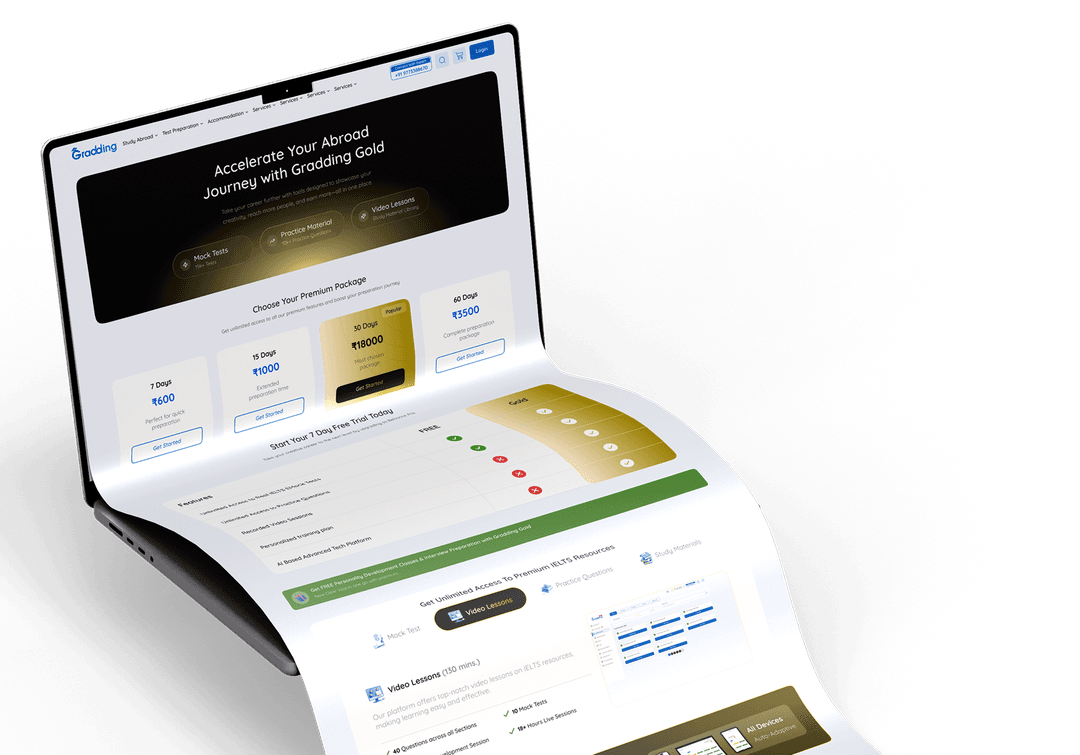
IELTS Prep Boost
Elevate your preparation with exclusive tools
Unlimited Access Includes
BEST PLANDuration Days
IELTS Reading Passage- Optimism and Health
Mindset is all. How you start the year will set the template for the rest, and two scientifically backed character traits hold the key: optimism and resilience (if the prospect leaves you feeling pessimistically spineless, the good news is that you can significantly boost both of these qualities).
Paragraph A: Faced with 12 months of plummeting economics and rising human distress, staunchly maintaining a rosy view might seem deludedly Pollyannaish. But here we encounter the optimism paradox. As Brice Pitt, an emeritus professor of the psychiatry of old age at Imperial College, London, told me: “Optimists are unrealistic. Depressive people see things as they really are, but that is a disadvantage from an evolutionary point of view. Optimism is a piece of equipment that carried us through millennia of setbacks.”
Paragraph B: Optimists have plenty to be happy about. In other words, if you can convince yourself that things will get better, the odds of it happening will improve - because you keep on playing the game. In this light, optimism “is a habitual way of explaining your setbacks to yourself”, reports Martin Seligman, the psychology professor and author of Learned Optimism. The research shows that when times get tough, optimists do better than pessimists - they succeed better at work, respond better to stress, suffer fewer depressive episodes, and achieve more personal goals.
Paragraph C: Studies also show that belief can help with the financial pinch. Chad Wallens, a social forecaster at the Henley Centre who surveyed middle-class Britons’ beliefs about income, has found that “the people who feel wealthiest, and those who feel poorest, actually have almost the same amount of money at their disposal. Their attitudes and behaviour patterns, however, are different from one another.”
Paragraph D: Optimists have something else to be cheerful about - in general, they are more robust. For example, a study of 660 volunteers by the Yale University psychologist Dr. Becca Levy found that thinking positively adds an average of seven years to your life. Other American research claims to have identified a physical mechanism behind this. A Harvard Medical School study of 670 men found that the optimists have significantly better lung function. The lead author, Dr. Rosalind Wright, believes that attitude somehow strengthens the immune system. “Preliminary studies on heart patients suggest that, by changing a person’s outlook, you can improve their mortality risk,” she says.
Paragraph E: Few studies have tried to ascertain the proportion of optimists in the world. But a 1995 nationwide survey conducted by the American magazine Adweek found that about half the population counted themselves as optimists, with women slightly more apt than men (53 per cent versus 48 per cent) to see the sunny side.
Paragraph F: Of course, there is no guarantee that optimism will insulate you from the crunch’s worst effects, but the best strategy is still to keep smiling and thank your lucky stars. Because (as every good sports coach knows) adversity is character-forming - so long as you practise the skills of resilience. Research among tycoons and business leaders shows that the path to success is often littered with failure: a record of sackings, bankruptcies and blistering castigation. But instead of curling into a foetal ball beneath the coffee table, they resiliently pick themselves up, learn from their pratfalls and march boldly towards the next opportunity.
Paragraph G: The American Psychological Association defines resilience as the ability to adapt in the face of adversity, trauma or tragedy. A resilient person may go through difficulty and uncertainty, but he or she will doggedly bounce back.
Paragraph H: Optimism is one of the central traits required in building resilience, say Yale University investigators in the. Annual Review of Clinical Psychology. They add that resilient people learn to hold on to their sense of humour and this can help them to keep a flexible attitude when big changes of plan are warranted. The ability to accept your lot with equanimity also plays an important role, the study adds.
Paragraph I: One of the best ways to acquire resilience is through experiencing a difficult childhood, the sociologist Steven Stack reports in the Journal of Social Psychology. For example, short men are less likely to commit suicide than tall guys, he says, because shorties develop psychological defence skills to handle the bullies and mickey-taking that their lack of stature attracts. By contrast, those who enjoyed adversity-free youths can get derailed by setbacks later on be cause they’ve never been inoculated against aggro.
Paragraph J: If you are handicapped by having had a happy childhood, then practising proactive optimism can help you to become more resilient. Studies of resilient people show that they take more risks; 'they court failure and learn not to fear it.
Paragraph K: And despite being thick-skinned, resilient types are also more open than average to other people. Bouncing through knock-backs is all part of the process.
Paragraph L: It’s about optimistic risk-taking - being confident that people will like you. Simply smiling and being warm to people can help. It’s an altruistic path to self-interest - and if it achieves nothing else, it will reinforce an age-old adage: hard times can bring out the best in you.
Questions for Reading Passage- Optimism and Health
Questions 1-4
Complete the summary below using NO MORE THAN THREE WORDS from Reading Passage for each answer.
A study group from Yale University had discovered that optimism can stretch one's life length by
1 ___________ years. And another group from Harvard thinks they have found the biological basis - optimists have better 2 _____________ because an optimist outlook boosts one's 3 __________. The study on 4 __________ was cited as evidence in support of this claim.
Questions 5-9
Complete each sentence with the correct ending A-H.
5 Brice Pitt believes
6 The research at Henley Centre discovers
7 The study conducted by Adweek finds
8 The Annual Review of Clinical Psychology reports
9 Steven Stack says in his report
A material wealth doesn't necessarily create happiness.
B optimists tend to be unrealistic about human evolution.
C optimism is advantageous for human evolution.
D adversity is the breeding ground of resilience.
E feelings of optimism vary according to gender.
F good humour means good flexibility.
G evenness of mind under stress is important to building resilience.
H having an optimistic outlook is a habit.
Questions 10-13
Do the following statements agree with the claims of the writer in Reading Passage?
In boxes 10-13 on your answer sheet write
YES if the statement agrees with the information
NO if the statement contradicts the information
NOT GIVEN if there is no information on this
10 The benefits of optimism on health have been long known.
11 Optimists have better relationships with people than pessimists.
12 People with happy childhoods won't be able to practise optimism.
13 Resilient people are often open, and even thick skinned.
Premium IELTS Coaching
at an Affordable Price
Answers for the Optimism and Health Reading Passage with Explanations
In this section, we have provided the “Optimism and Health Reading Answers” with detailed explanations. Read the complete solutions and score 8+ bands in the exam.
Question 1
Question 2
Question 3

Unlock All Explanations for Free
Question 4
Question 5
Question 6
Question 7
Question 8
Question 9
Question 10
Question 11
Question 12
Question 13
IELTS Prep Boost
Unlimited Access Includes
Other Passages
teste
teste
Quick Links
The above-given write-up provides an overview of the “Optimism and Health Reading Answers” with complete explanations. However, the passage highlights the relationship between being optimistic and leading a healthy lifestyle. It has twelve paragraphs with three different types of questions that will be asked in your IELTS exam. Thus a candidate must prepare for each IELTS reading question types so that they know how to answer each of the questions. Hope, after reading this passage you have gained a basic understanding of the reading section of IELTS.
Furthermore, the candidate who is preparing for the IELTS test must need to practice regularly. Thus, to prepare yourself you can take our free reading mock test in a real IELTS-based environment and can receive on-the-spot evaluation reports. Also, you can get access to unlimited mock tests for every section in the IELTS exam, to ace the exam with 8+ bands on your first attempt. Moreover, attend our online or offline classes and doubt-solving sessions to solve all your queries related to the IELTS exam.
Tips to Excel in the Optimism and Health Reading Passage
In this section, some tips have been mentioned that will help you excel in the “Optimism and Health Reading Answers.” Read these tips and try to execute them in your exam.
- For the Summary Completion questions, pay attention to the keywords in the sentence you are tackling.
- In the Matching Sentence Endings questions, look at the sentence beginnings, and underline the key words such as nouns, numbers, or modal verbs.
- For the Yes/No/Not Given questions, don’t look for the words. Instead, look for the synonyms.
Types of Questions in This Reading Passage
There are three different types of questions in the “Optimism and Health Reading Answers” passage. Have a look at them for a better understanding.
Summary Completion (Questions 1-4)
In this type of question, you will be given a summary of information from the text and there will be some gaps in that summary. You need to fill those gaps as per your knowledge and information from the passage.
Matching Sentence Endings (Questions 5-9)
In this type of question, you will be given a list of incomplete sentences with no endings and another list of possible endings. You are required to match the incomplete sentence with the correct ending based on the passage.
Yes/No/Not Given (Questions 10-13)
Yes/No/Not Given questions in the IELTS Reading test ask you to examine if a particular statement in the paragraph is true, false, or not given.
- Yes, statements are those that are expressed in the paragraph.
- No, statements are those that are contradicted in the passage.
- Not Given, statements are statements that are not expressly expressed or contradicted in the passage. It means that the particular statement is not given in the passage.
Conclusion
To conclude, we discussed the “Optimism and Health Reading Answers” with detailed explanations. This task of reading passages needs the proper techniques and strategies for a student to excel in it. Thus, we had a close look at the passage and its answers to the different types of questions. Moreover, for more such exposure to the reading passages, you can take our IELTS reading mock test at Gradding.com and see your score with the instant assessment by our trained tutors.
