
How Do We Find Our Way Reading Answers with Explanations
Maybe, for you, it is a little bit complicated to find the correct answer in the IELTS reading test. Do you know why it happened? Well, sometimes, when you do not practice well or do not focus on your preparation well, you lose marks in the real exam. To avoid this issue, your planning for the IELTS reading section must be good enough. However, you can use several ways, and one of the best is to refer to this write-up.
Here, we will provide you with how do we find our way reading answers along with their explanation. You have to solve all the questions as quickly as possible, and then you will be able to improve your skills.
IELTS Prep Boost
Elevate your preparation with exclusive tools
Unlimited Access Includes
BEST PLANDuration Days
IELTS Reading Passage: How Do We Find Our Way
Paragraph A. The car's computer voice tells the driver to drive 200 yards and make a right. You drive slowly, pay attention to the traffic signals, and reach your destination without any problems. It is convenient to have the Global Positioning System (GPS) direct you within a few yards of your goal. However, you run the danger of becoming lost if the satellite service's digital maps lapse even a little. The ability of people to navigate in three dimensions must, therefore, be relied upon. Your biological finder, however, has a crucial advantage over GPS: because it works in various ways, it is unaffected if only one element of the guidance system breaks down. On the sidewalk, people are approachable. Take a different route if one seems familiar. Use a navigational rule instead: "If I keep the East River to my left, I will eventually cross 34th Street." The human positioning system is flexible and capable of absorbing new data. Anyone who can find their way between points A and B and between points A and C should be able to do the same between points B and C.
Paragraph B. So, how does this cognitively demanding system function? Researchers are looking into three approaches for spatial awareness: guidelines, route assimilation, and route following. Humans used all 3 or some of them. According to experts, as we gain knowledge about these navigation systems' abilities, they may support our cognition and rational thinking abilities. Grand Central Terminal, presume you've merely arrived in New York City, a town you've never visited before. You disembark at Manhattan's Grand Central Terminal. You have a few hours before you have to return to catch your ride home. You travel uptown to see well-known landmarks such as Rockefeller Centre, Central Park, and the Metropolitan Museum of Art. You stop at various stores along the way. Returning to the station is now necessary. But how precisely
Paragraph C. If users ask passers-by for assistance, they will most likely receive information in a variety of formats. "Look down there," someone says, pointing to a prominent landmark. Have you noticed the MetLife Building, which is both tall and wide? "The station is right beneath it," so go there. This navigational approach is referred to by neurologists as "guidance," which implies that a faraway landmark serves as an indicator of one's location.
Paragraph D. Another city dweller could inquire, "What regions do you recollect travelling through?" Okay. Take a trip down to St. Patrick's Cathedral from the far end of Central Park. Grand Central will be on your left in a few blocks." In this situation, you are led to the most recent location that you can recall. Then, you retrace your steps to the next significant location, and so on. Your brain is assembling the pieces of your journey into a comprehensive progress report. This tactic is known as "path integration" by researchers. Few animals, such as insects, spiders, crabs, and rodents, primarily use their paths to navigate. Cataglyphis desert ants employ this technique to return from foraging up to 100 yards away. They use the refraction of sunlight to navigate even in overcast skies by noting the general direction they came from and retracing their steps. They adhere to this internal homing vector as they return. Even when a scientist lifts an ant and places it in a whole other position, the ant will persistently continue in the direction it was first pointed at until it has "gone back" the entire distance it travelled from its nest. The ant begins to make larger loops to get home once it recognises that it has failed.
Paragraph E. Whether an animal is seeking to get to the anthill or the train station, it must keep track of its movements to know, on the way back, which portions it has already finished. To determine the direction your body has moved, your brain gathers information about your environment as you move, including sounds, images, smells, lights, muscle contractions, and a sense of time passing. Images of key points in your travel include the train station, the open courtyard, the sizzling sausages on that street vendor's grill, and the cathedral spire.
Paragraph F. We employ a third navigational strategy in addition to guidance and path integration. A Manhattan office worker on a corner would respond, When asked for instructions, I replied, "Walk straight down Fifth, turn left on 47th, turn right on Park, go via the walkway of the Helmsley Building, then cross the street to the MetLife Building into Grand Central. Route following is a method of navigation that makes use of landmarks like buildings and street names as well as directions like "straight," "turn," and "go through."
Paragraph G. Even if route following is more precise than guidance or path integration, if you forget the specifics and wind up somewhere unexpected, there is no way to get back on track because you don't know the general direction or have a landmark to utilise as a point of reference for your goal. The route-following navigation technique is intellectually challenging. We must remember all the landmarks and alternate routes. Despite being the most thorough and, therefore, most reliable method, it is prone to typical memory mistakes. Path integration puts less strain on our cognitive memory because it just needs to retain the homing vector and a small number of general instructions. Path integration works because we constantly have access to these inputs, which are essentially dependent on our awareness of the general direction of our body's motion. Nevertheless, route-following instructions are routinely given, in part because directing someone to go in a specific direction is not always effective in a complicated, man-made environment.
Paragraph H. Maybe it's a metaphor. When you return to Manhattan, you'll utilise your memories to get around. You'll likely combine route following, path integration, and guidance. But how exactly do these structures offer detailed instructions? Do people have a mental map of the real world that includes thick lines for major roads and thin lines for side streets, along with icons for cities, train stations, and churches? A "cognitive map" is the term used by cognitive psychologists and neurobiologists to describe the area of human memory that manages navigation. The map metaphor makes sense, given that maps are the easiest way to present geographic information for simple visual interpretation. Before writing became widely employed in many countries, maps were used in practically every society. It's even conceivable that the universal organisation of our spatial memory systems served as the foundation for the creation of maps.
Paragraph I. However, a rising body of research contends that the cognitive map is essentially a metaphor, casting doubt on the notion that we have a true mental map. It might be more like a set of hierarchical relationships. To get back to Grand Central, you must first think broadly, or imagine the general structure of the station. Then, you picture the route via that system to the last place you can remember being. Then, you scan your immediate surroundings for a recognisable storefront or street sign that will direct you there. In this hierarchical, or nested, structure, positions, and distances are relative, as opposed to a road map where the same information is displayed on a geometrically precise scale.
Questions for Reading Passage: How Do We Find Our Way
Questions 1-5
Use the information in the passage to match the category of each navigation method (listed A-C) with correct statement.
Write the appropriate letters A-C in boxes 1-5 on your answer sheet.
NB You may use any letter more than once.
A. guidance method
B. path integration method
C. route following method
1. Split the route up into several smaller parts.
2. When mistakes are made, a person needs to go back.
3. Find a building that can be seen from far away.
4. Recall all the details along the way.
5. Memorize the buildings that you have passed by.
Questions 6-8
Choose the correct letter, A, B, C or D.
Write your answers in boxes 6-8 on your answer sheet
6. According to the passage, how does the Cataglyphis ant respond if it is taken to a different location?
A. changes its orientation sensors to adapt
B. releases biological scent for help from others
C. continues to move according to the original orientation
D. gets completely lost once disturbed
7. What did the author say about the route following method?
A. dependent on directions to move on
B. dependent on memory and reasoning
C. dependent on man-made settings
D. dependent on the homing vector
8. Which of the following is true about the “cognitive map” in this passage?
A. There is no obvious difference between it and a real map.
B. It exists in our heads and is always correct.
C. It only exists in some cultures.
D. It is managed by a portion of our memory.
Questions 9-13
Do the following statements agree with the information given in Reading Passage?
In boxes 9-13 on your answer sheet,
TRUE, if the statement agrees with the information
FALSE, if the statement contradicts the information
NOT GIVEN, if there is no information on this
9. Biological navigation is flexible.
10. Insects have many ways to navigate that are in common with many other animals.
11. When someone follows a route, he or she collects comprehensive perceptual information in the mind along the way.
12. The path integration method has a higher requirement of memory compared with the route following method.
13. When people find their way, they have an exact map in their mind.
Premium IELTS Coaching
at an Affordable Price
Answers for How Do We Find Our Way Reading Passage with Explanations
In the following details, we are going to provide you with how do we find our way reading answers along with their explanations. Try to solve the passage on your own, and match your responses with the list below. This is one of the best ways to test your skills.
Question 1
Question 2
Question 3

Unlock All Explanations for Free
Question 4
Question 5
Question 6
Question 7
Question 8
Question 9
Question 10
Question 11
Question 12
Question 13
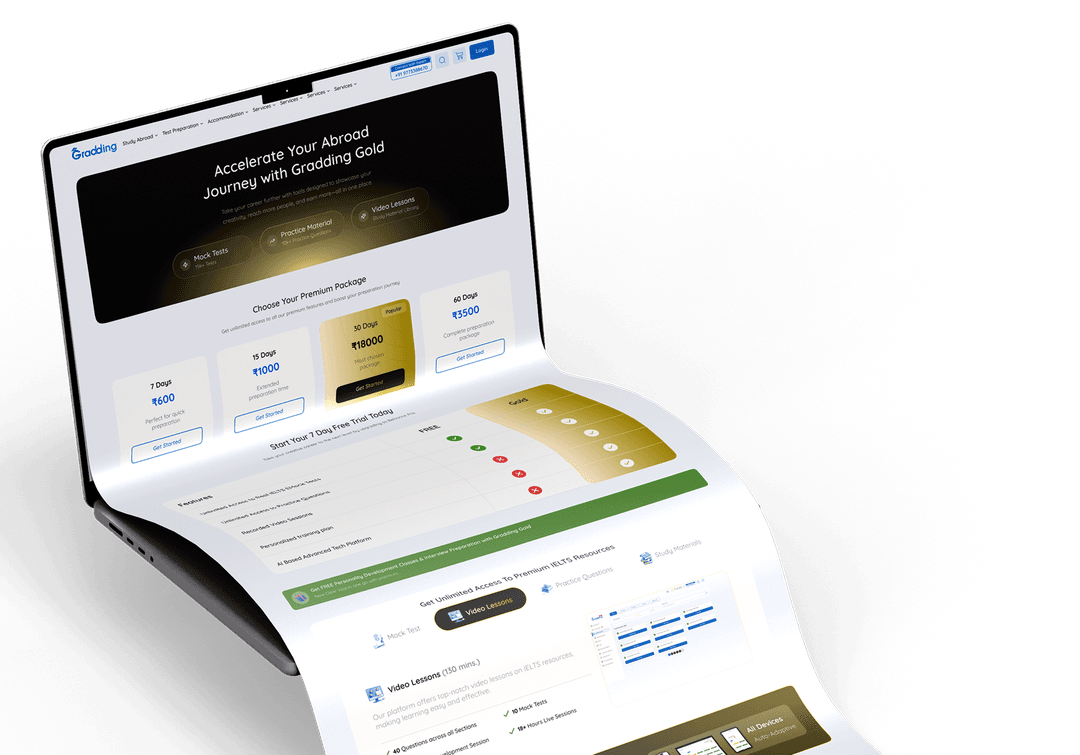
IELTS Prep Boost
Unlimited Access Includes
Other Passages
teste
teste
Quick Links
With the above information, you have explored the answers of how do we find our way reading passage. Here, the text discusses the different ways humans navigate, focusing on three main approaches: path integration, route following, and using a "cognitive map". It explains how these methods, both biological and technological, like GPS, are used in combination to navigate, and also explores the "cognitive map" metaphor and the hierarchical structure of spatial memory. This method involves mentally tracking your direction and movement from a starting point, relying on input from your body’s motion.
This was the gist of the passage. Hopefully, you are clear with this. If you found this test helpful, you can also use the IELTS reading mock test and practice in the real exam environment. To save yourself from losing score, this is one of the best techniques you can use.
Tips for Acing How Do We Find Our Way Reading Answers
In the following information, we will provide you with the tips for finding out the answers of how do we find our way. Often, students find trouble in solving passages because they do not have good strategies for referring. You can use IELTS sample test PDFs and practice for the test. But knowing about the tips is necessary. Let’s read about it.
- Before You Start - Always read the instructions carefully, noting the word limit for short answers and whether numbers count as words. Focus on the keywords related to your question, not the entire passage, and do not get bogged down by unfamiliar vocabulary.
- During the Reading - Go through the questions first to get an idea of what information you need to find. This will make the passage easier to navigate. In the questions, identify the keywords that will help you locate the answer in the passage. Also, quickly skim the passage for a general idea, then scan for the keywords you identified. Look for synonyms or paraphrased versions of the keywords.
- After Finding Potential Answers - Once you think you have found an answer, check it against the question and the passage to ensure it is accurate and fits the word limit. Answers are not always in the same order as the questions. You may need to read the entire passage to find all the answers.
Types of Tasks in How Do We Find Our Way Reading Passage
You will be given different types of tasks in the IELTS reading section when you take the exam. In the how do we find our way reading answers, there are three task types covered. Before solving, understand the format well and then start finding the answers. Here is the detailed overview:
Matching Features Questions (1-5)
You have given here 1 to 5 questions based on matching features. In this task, you will have some sort of choices from A to C, and a list of sentences from 1 to 5. You have to read those statements and identify which match the category of each navigation method listed from A to C. Then, you will write the correct letter.
Multiple Choice Questions (6-8)
There are 6 to 8 questions based on multiple choice. In this task, you have a list of options from A to D, along with some questions. You have to first read the statement and its options. Then, you will choose the answer that is correct according to the passage’s information. Further, you will write the correct letter and eliminate the rest of the options.
True, False, and Not Given Questions (9-13)
From 9 to 13 questions are based on true, false, and not given. In this question type, you are given some sort of sentences which you have to read and give your opinions on. The information is taken from the passage. After reading, you will have to write:
- True, if the statement agrees with the information.
- False, if the statement contradicts the information.
- Not given, if there is no information on this.
Conclusion
You have explored how do we find our way reading answers in this write-up. Hopefully, this sample was fruitful for you, and you have successfully solved all the questions. Now, you can plan to practice more like this and work on your weak points. In case you are looking for any professional guidance, then you can join offline or online IELTS coaching and rehearse under a mentor’s guidance. They can also provide you with instant feedback so you can improve.
